Incident command simulator
Units arrive, command gives the assignments, and everyone sees where the rigs, lines, and ladders ended up. Online, with an instructor running the fire.
No account needed. The first visit takes about a minute to load. After that it opens in seconds.
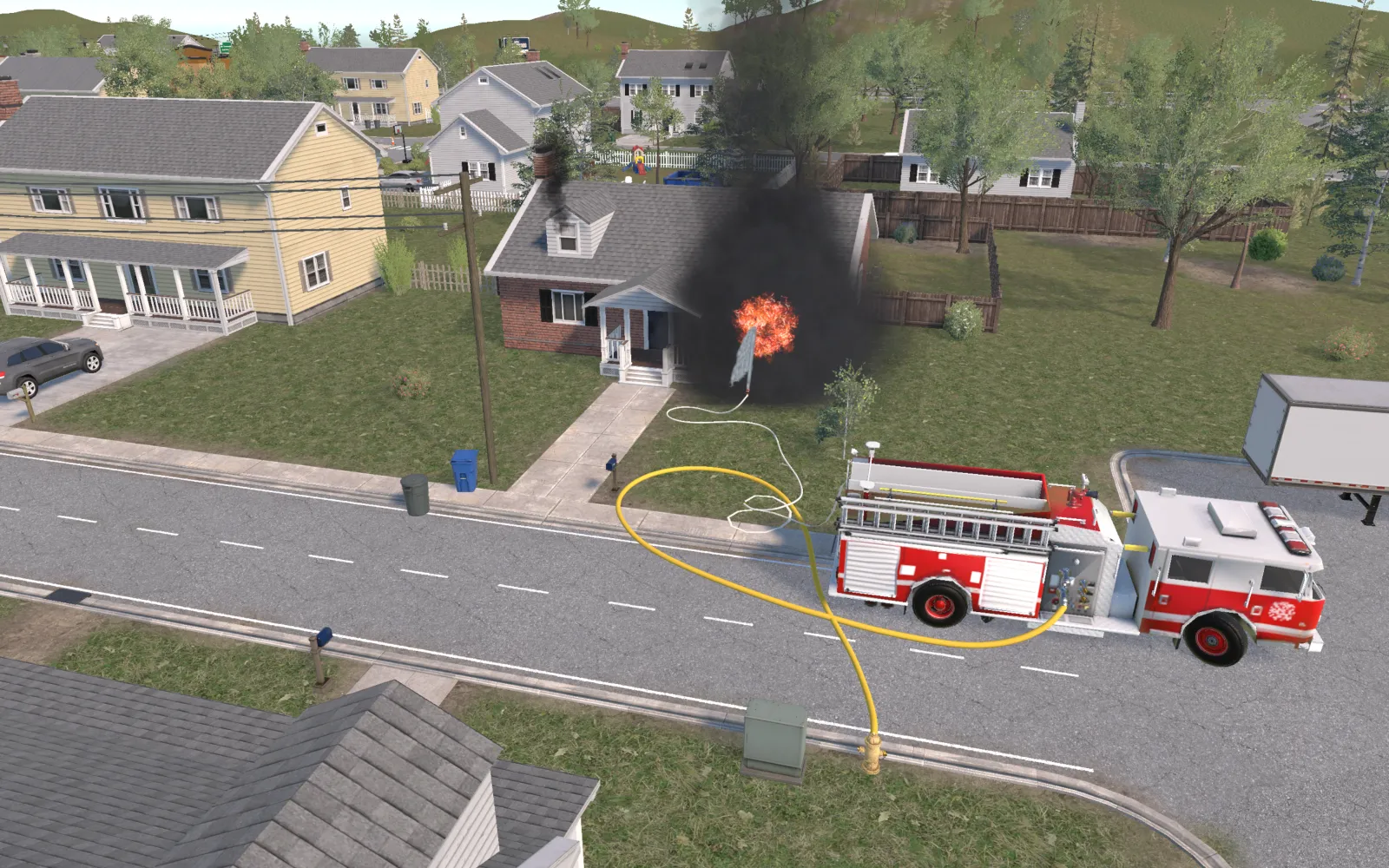
Several companies on one fire.
The instructor assigns the rigs. Each company spots its own apparatus, pulls its own line, and throws its own ladders, from its own computer.
Label each unit, Engine 12 or Tower 6, so command has someone to call.
It's officer development: does command give valid assignments, and do the companies follow them?
Where you spot the rig is a decision.
Park the chief's car where it has the best view of the fire, and it may be in the way of every unit coming in behind it. Stop the engine short of the corner and the tower can't get its master stream in later. The mistakes play out where everyone can see them, and the instructor decides whether to call a timeout or let it run.
Command is spoken.
Assignments go out by voice, in the room or over your own portables on a training channel. The simulator has no radio and doesn't keep track of assignments. What it gives command is a fireground to run.
Mark the fireground.
Lay out the operating areas, RIT in the front yard and on deck by the steps, and label them. Streets have names, so command can say where to come in and which hydrant to grab.
How a command drill runs
- The instructor opens a scene, sets the fire, and assigns each member a rig.
- The first officer in establishes command, by street: "Battalion 2 on the scene, establishing Elm Street command."
- Units arrive and get their assignments. One lays a supply line from the hydrant, one pulls the preconnect to the front door, one throws a ladder.
- The instructor makes the fire better or worse, and calls a timeout when there's something to talk about.
- Caught a call? Save the drill and pick it up right where you left off.
Questions
- Does it have a radio?
- No. Crews use their own portables on a training channel, or speak up when everyone is in one room.
- Does it score or record the drill?
- No. There is no scoring, no playback, and no record of who trained. The instructor runs the review.
- What kinds of incidents?
- Structure fires, with vehicle and flammable liquid fires, worked from the outside: every door is locked, so nobody goes in. Not EMS, hazmat, or wildland, and there are no victims to search for.
- Can we rebuild a fire we ran?
- Close to it, if the building is like one in the catalog. Build the street, set the fire, and walk your members through how the response developed and what you'd do differently.
- What does Try it now show?
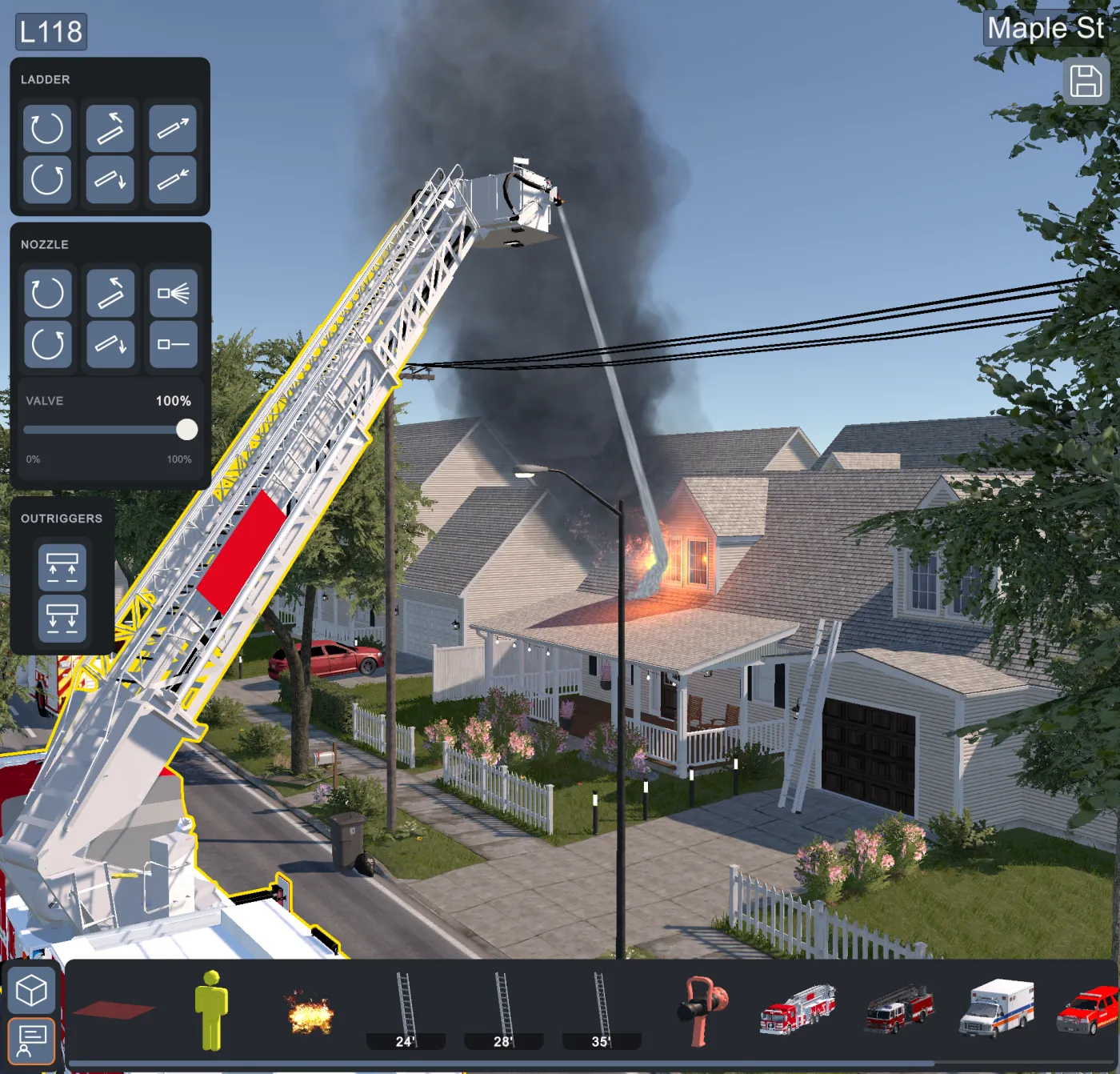
- The controls, on a house fire. Book a demo to see a command drill with several companies.
- What does it run on?
- Chrome or Edge on a desktop or laptop, with an internet connection. Not tablets, and not offline.
See it on your own screen.
Prices starting at $300. Subscribe now, or book a demo.